
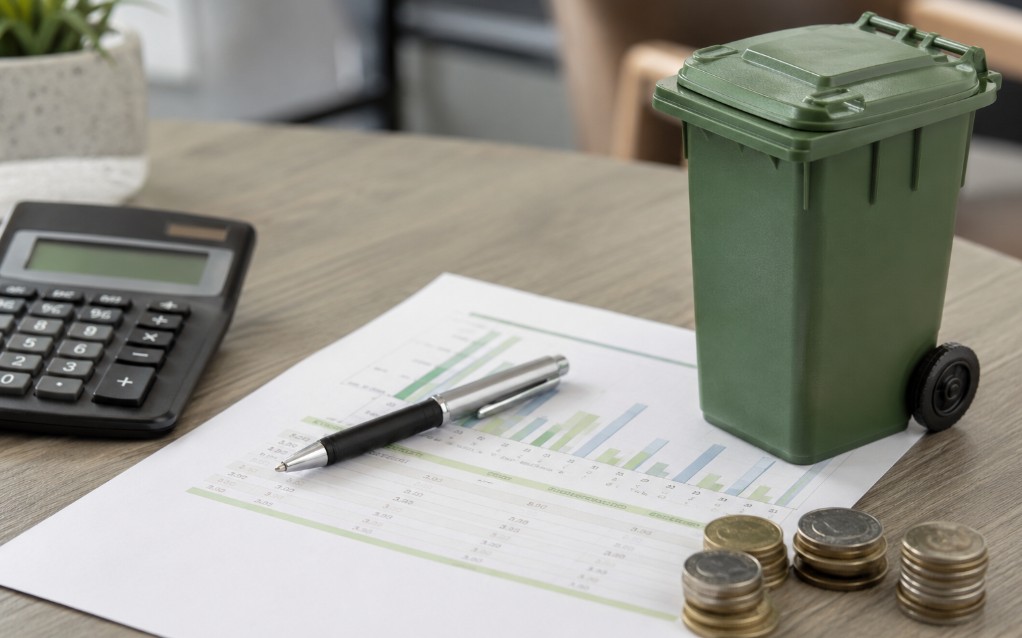
The cost of business waste collection depends on four things: the size of your bin, how often it’s emptied, the type of waste, and your location. A small business on a fortnightly collection will pay far less than a restaurant needing daily food-waste pickups — but right-sizing your bins and separating recycling almost always brings the total down.
What drives the price?
| Factor | How it affects cost |
|---|---|
| Bin size | From a 240L up to a 1100L bin — bigger bins cost more per lift but less per litre. |
| Collection frequency | Weekly, fortnightly, or multiple times a week. More lifts = more cost. Right-sizing avoids paying for half-empty bins. |
| Waste type | General waste costs more to dispose of than segregated recycling. Food waste and hazardous waste are priced separately. |
| Location & access | Rural or hard-to-reach sites cost more to service; city-centre sites may need timed or assisted collections. |
How to cut the bill
- Separate your recycling. Diverting card, plastic and glass out of general waste shrinks your most expensive stream — and it’s now required under Simpler Recycling.
- Right-size your bins. Consistently overflowing? Go bigger or more frequent. Half-empty? Scale back. See our commercial recycling tips.
- Consolidate suppliers. One provider for skips, bins and hazardous waste means one invoice and better rates — the true cost of juggling suppliers is usually higher than it looks.
- Match the service to the job. A one-off clear-out is cheaper with a skip; ongoing waste is cheaper on a scheduled collection.
Get an accurate figure
Because price hinges on your exact setup, the only way to know is a quick quote. Select A Skip arranges commercial waste collections UK-wide through 1,100+ licensed suppliers — so you get local rates with national buying power.
Frequently asked questions
How much does commercial waste collection cost?
It varies by bin size, frequency, waste type and location, so there’s no single figure. The best way to control it is to separate recycling, right-size your bins and get a quote based on your actual waste.
Is it cheaper to have a skip or a bin collection?
For a one-off clear-out or a project, a skip is usually cheaper. For steady week-to-week waste, a scheduled bin collection works out better. Many businesses use both.
Why is general waste more expensive than recycling?
General (residual) waste carries higher disposal and landfill-related costs. Recyclables have value and lower disposal costs, so shifting waste from general to recycling reduces your bill.
Are there hidden charges to watch for?
Ask whether the price includes the bin rental, the Duty of Care transfer note and any excess-weight or contamination charges. A clear, all-in quote avoids surprises.
Want a firm price? Send us your details and we’ll quote your exact setup, usually the same working day.