

Segregating Construction Waste: How Separate Skips Cut Your Costs
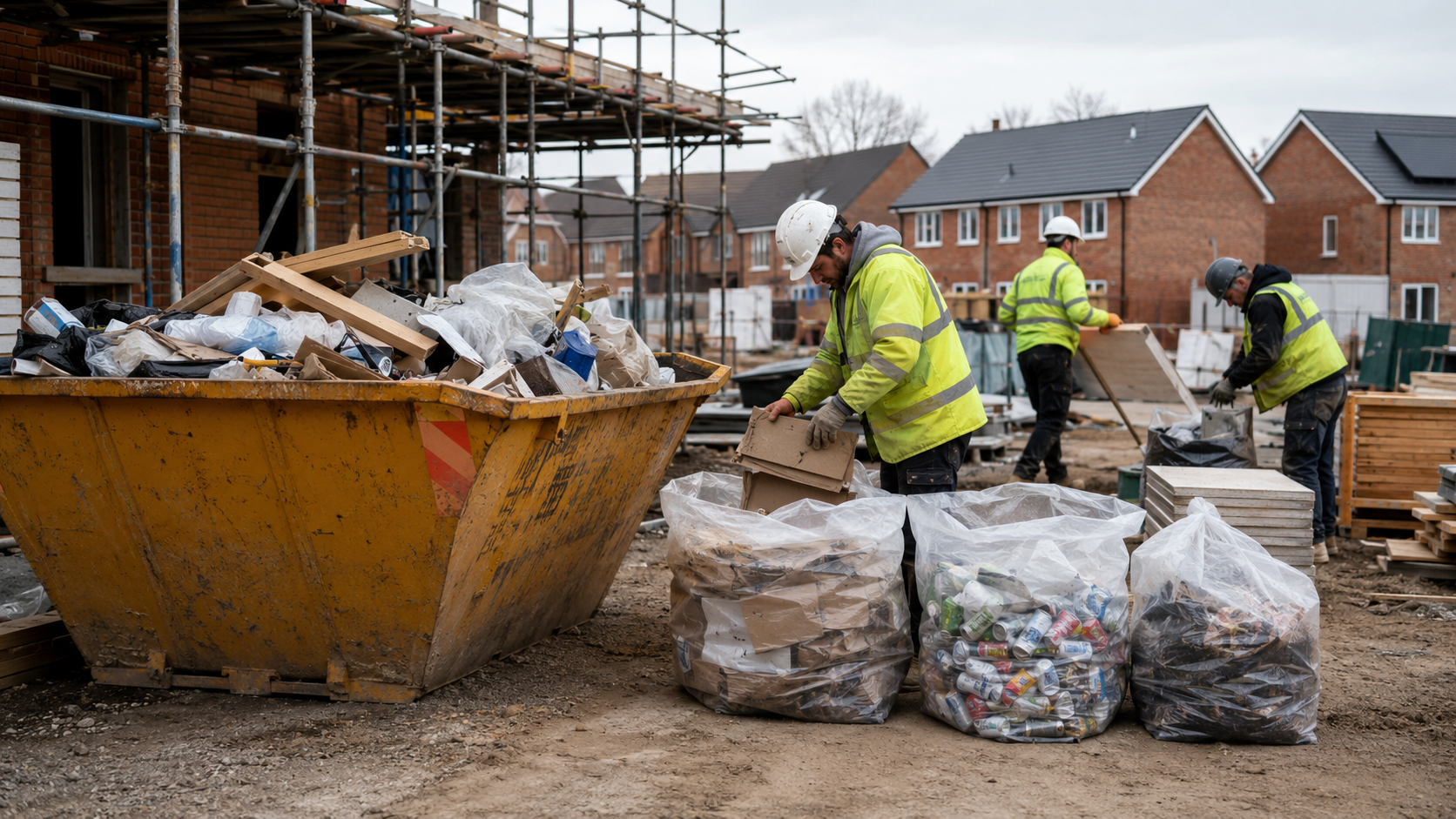
On most building sites, everything goes into one skip. Brick, plasterboard, timber, packaging and the odd paint tin all end up together. It is quick, but it is usually the most expensive way to get rid of waste.
The cost of disposal depends heavily on what is in the skip. Clean, separated waste can be recycled or taxed at a low rate. Mixed waste costs far more to process. On a job of any size the difference adds up fast.
Landfill tax is the big driver
From 1 April 2026, landfill tax in England is charged at two rates:
| Rate | Applies to | Per tonne |
|---|---|---|
| Standard rate | Mixed and general waste | £130.75 |
| Lower rate | Inert waste such as soil, stone, brick and concrete | £8.85 |
Scotland and Wales set their own landfill taxes, but the gap between the two rates is similar.
Take 8 tonnes of brick and concrete rubble. Taxed at the lower rate, the tax alone is about £71. If the same rubble goes in with mixed waste, the whole load is treated as general waste. The tax element could then be over £1,000. In practice, clean inert waste is often crushed and recycled into aggregate, so it may not go to landfill at all.
How contamination spoils a load
A skip of clean rubble only stays cheap while it stays clean. A few sheets of plasterboard, some timber offcuts or a bag of packaging can push the whole load into the mixed waste category.
Plasterboard needs particular care. Gypsum must not go into landfill mixed with general waste, so it has to be kept separate. Our guide on putting plasterboard in a skip explains why.
A simple segregation setup
You do not need a skip for every material. On most sites, three or four streams cover nearly everything:
- Inert waste. Soil, brick, block, concrete and tile. Use a 6 or 8 yard skip, as this waste is heavy.
- Wood. Timber, pallets and offcuts. Clean wood recycles well and costs less to process than mixed waste.
- Plasterboard. Keep it in bulk bags or a small separate skip, kept dry.
- Mixed general waste. Packaging, plastics and everything else. This is where a 12 yard skip or a RoRo container earns its place.
Scrap metal is worth keeping aside as well. It often has a resale value.
Making it work on site
Segregation only saves money if people actually do it. A few habits help:
- Label every skip clearly. Use signs that can be read from across the site.
- Brief every trade. Subcontractors often cause the contamination. Include waste rules in site inductions.
- Put skips where the waste is made. If the right skip is at the far end of the site, people will use the nearest one.
- Check skips before collection. A two minute look can catch contamination before it costs you.
It helps with compliance too
Many clients and main contractors now ask for recycling rates in tenders and reports. Separated waste gives you real figures to report. See our guides on calculating your recycling rate, site waste management plans and waste compliance for tenders.
Ask us to price it both ways
If you are not sure segregation is worth it on your job, tell us what waste you expect. We can quote a single mixed skip and a segregated setup side by side, so you can see the difference in real numbers.
Sources: letsrecycle.com, landfill tax 2026