
What “Zero Waste to Landfill” Actually Means
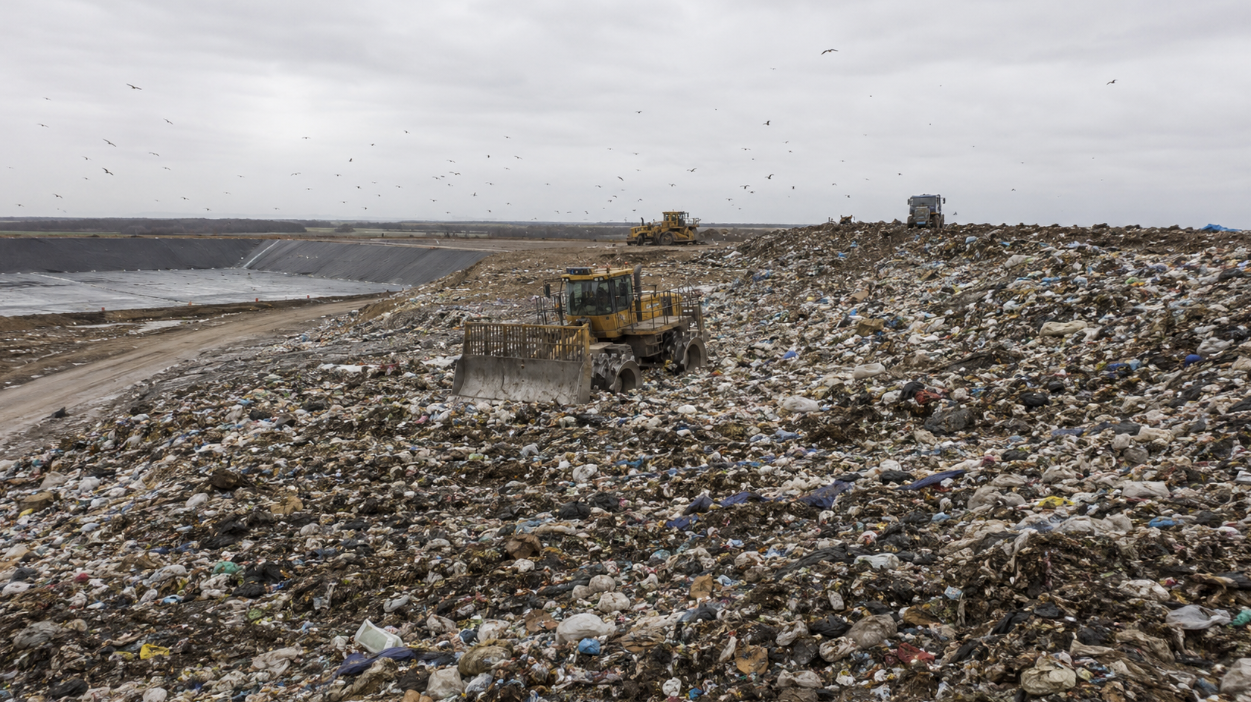
“Zero waste to landfill” is appearing on more tender documents, supplier questionnaires and company sustainability pages every year. It sounds like an impossible standard for a normal business — but it’s more achievable (and more loosely defined) than most owners realise. Here’s what the term really means, why clients increasingly ask about it, and a realistic route to getting there.
It does not mean your business produces no waste. It means that none of the waste you produce ends up buried in landfill. Everything is instead:
- Reused — furniture, equipment, pallets, packaging going back into circulation
- Recycled — paper, card, plastics, metals, glass reprocessed into new materials
- Composted or digested — food and organic waste sent to anaerobic digestion or composting
- Recovered for energy — genuinely non-recyclable residual waste sent to energy-from-waste facilities instead of landfill
That last one matters: energy recovery is what makes zero waste to landfill practical for ordinary businesses. Your general waste bin doesn’t disappear — it’s just routed to a facility that turns it into electricity rather than a hole in the ground.
Worth knowing: most claims are actually “99%+ diversion” in practice, since small amounts (like incinerator ash residues) may still be landfilled. Reputable providers state their diversion rate rather than a flat “zero” — and being able to say “we divert 99% of our waste from landfill, verified by our waste reports” is more credible in a tender than an unevidenced “zero” claim anyway.
Why Bother? The Business Case
- Winning work. Larger companies and public sector buyers increasingly push sustainability requirements down their supply chain. “What is your landfill diversion rate?” is now a standard pre-qualification question — an evidenced answer keeps you in the running.
- Cost. Landfill Tax stands at over £100 per tonne and rises annually, and it’s baked into the price of every general waste collection. The less true landfill waste you produce, the less exposure you have to it.
- ESG and reporting. Waste diversion is one of the easiest environmental metrics for a small business to measure and improve — a quick win for any ESG statement.
- Reputation. For customer-facing businesses, it’s a genuine differentiator that costs little to communicate once you’re actually doing it.
The Route: Follow the Waste Hierarchy
Zero waste to landfill isn’t one big change — it’s the waste hierarchy applied properly, top to bottom:
1. Reduce. The cheapest waste is the waste you never create. Review packaging with suppliers, go digital where paper isn’t needed, tackle over-ordering (the biggest food waste driver in hospitality).
2. Reuse. Pallets, containers and packaging returned to suppliers; furniture and IT redeployed, donated or sold rather than skipped.
3. Recycle — and segregate well. This is where most businesses win or lose. Clean, separated streams (card, plastics, glass, metals, food) get recycled; contaminated mixed waste often can’t be. The Simpler Recycling rules already require most businesses to separate these streams, so compliance and zero-to-landfill are largely the same journey.
4. Recover. Whatever genuinely can’t be recycled goes to energy-from-waste rather than landfill. You can’t arrange this yourself — it comes down to which facilities your waste provider uses, which is why step 5 is the crux.
5. Choose a provider who can evidence it. The difference between claiming and achieving zero waste to landfill is your waste contractor. You need one who routes residual waste to energy recovery, recycles at licensed facilities, and — critically — reports your tonnages and destinations so you can prove your diversion rate to auditors and clients.
What This Looks Like for a Typical Small Business
A realistic 12-month plan:
- Months 1–2: Waste audit — what you produce, volumes, current destinations. Ask your existing provider for your landfill diversion figure; if they can’t tell you, that’s your answer.
- Months 3–4: Set up proper segregation — food, dry recycling, glass where relevant, general waste. Label bins, brief staff, remove desk bins.
- Months 5–6: Move residual waste to an energy-from-waste route via your provider. Fix the biggest single stream you’re still binning (usually food or cardboard).
- Months 7–12: Monitor monthly reports, tackle contamination, and start quoting your diversion rate in tenders and on your website.
Most SMEs can get from a standard setup to 95%+ diversion within a year without meaningful capital cost — the heavy lifting is done by segregation and provider choice, not equipment.
Common Pitfalls
- Taking “zero waste to landfill” on trust. Ask any provider making the claim where your general waste actually goes, and ask for it in writing.
- Contamination. One bag of food waste in a card bin can turn a recyclable load into residual waste. Staff training beats bin infrastructure every time.
- Forgetting the irregular stuff. Refits, clearances and one-off skips count towards your footprint too — use providers who sort skip waste at licensed recycling facilities rather than tipping it.
- No paper trail. Without tonnage reports you can’t evidence anything, and unevidenced green claims are increasingly a regulatory risk in themselves.
Getting There With One Provider
The practical shortcut is consolidating your waste with a provider built to divert. Select A Skip’s commercial waste management service routes recyclables to licensed reprocessors and residual waste away from landfill, while our waste reporting gives you the tonnage and destination data to evidence your diversion rate — the exact numbers tenders and ESG statements ask for. One-off clearances and refits are covered too: waste from our skips is sorted and recycled at licensed facilities, so project waste doesn’t undo your day-to-day progress.
Get in touch for a no-obligation review of your current setup — we reply the same working day.