
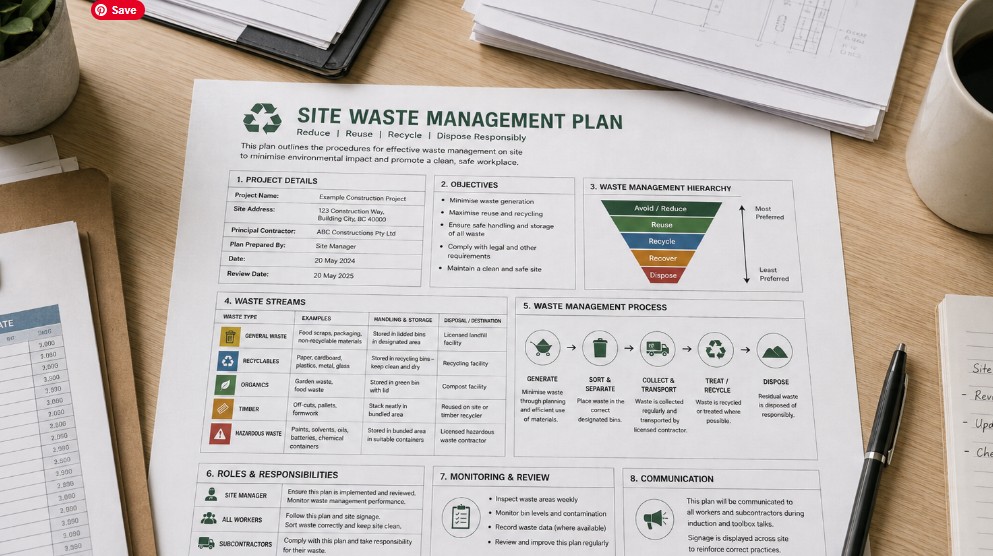
A Site Waste Management Plan (SWMP) is a document that sets out how waste on a construction project will be reduced, reused, recycled and disposed of. In England it is no longer a legal requirement — the SWMP Regulations were revoked in December 2013 — but SWMPs are still widely used as best practice and are often required by clients, planning conditions or BREEAM.
What’s in an SWMP?
- The types and quantities of waste the project will produce;
- How each waste stream will be reduced, reused, recycled or disposed of;
- Who is responsible, and which licensed carriers and facilities will be used;
- A record of what actually happened, updated as the job progresses.
Is an SWMP a legal requirement?
Not in England. The Site Waste Management Plans Regulations 2008 were repealed on 1 December 2013, so there’s no statutory duty to have one for projects starting after that date. However, the underlying legal obligations still apply in full — your Duty of Care under the Environmental Protection Act 1990, using registered carriers, and keeping transfer notes.
Why most sites still use one
| Reason | Detail |
|---|---|
| Client & tender requirements | Main contractors and public-sector clients frequently ask for an SWMP as a condition of the contract. |
| Planning & BREEAM | Local planning authorities and BREEAM assessments often require a waste plan. |
| Cost control | Planning waste up front cuts skip movements, disposal cost and materials wastage. |
| Larger projects | For projects over £300,000 it’s considered good practice as part of your duty of care. |
Make the plan easy to deliver
An SWMP is only as good as the waste handling behind it. Select A Skip supports construction sites UK-wide with skips and RoRo containers, muck-away and aggregates, and waste reporting that gives you the tonnage and recycling-rate figures your plan — and your tenders — need.
Frequently asked questions
Are Site Waste Management Plans a legal requirement?
Not in England — the regulations were revoked in December 2013. They remain best practice and are often required contractually, by planning conditions or by BREEAM.
Who is responsible for the SWMP on a project?
Typically the principal contractor, working with the client. It should name who manages waste on site and be updated as the project runs.
Do small building projects need an SWMP?
There’s no legal threshold since 2013, but they’re most commonly used on larger projects — particularly those over £300,000 or where a client, tender or planning condition requires one.
What’s the difference between an SWMP and duty of care?
Duty of care is the ongoing legal obligation to handle waste responsibly and keep paperwork; an SWMP is a planning document that helps you meet it. Duty of care is mandatory; the SWMP itself is not.
Building and need your waste handled? Talk to us about skips, muck-away and reporting to back your SWMP.